Last updated: September 2026. Prices and availability were checked on the day of writing.
Some of the most exciting painting anywhere right now is coming out of studios in Lagos, Accra, Kampala and Arusha. It moves between portraiture, heritage scenes, landscape and bold geometric abstraction, often in the same artist's body of work, and much of it is still sold directly by the people who paint it.
This guide is about paintings specifically: the styles you will meet, what oil, acrylic and impasto each give you, how to choose a size for your wall, and original African paintings for sale right now, grouped by style so you can go straight to what you love.
If you are new to buying art online and want the basics first (originals versus prints, what things cost, how to spot a reproduction), start with our guide to buying original African art, then come back here.
There is no single African style
The phrase "African painting" covers artists from dozens of countries and traditions. What ties the best of it together is not a look but a directness of subject. These paintings are usually about something: identity, faith, motherhood, childhood ambition, mental health, a festival, a market morning. When someone asks about the painting in your hallway, there is a story to tell, and that story is part of what you are buying.
The main styles, with paintings for sale now
Every painting below is an original, live on Sokofa, and was checked on the day this guide was written. Originals are one of one, so some may sell.
Portraits
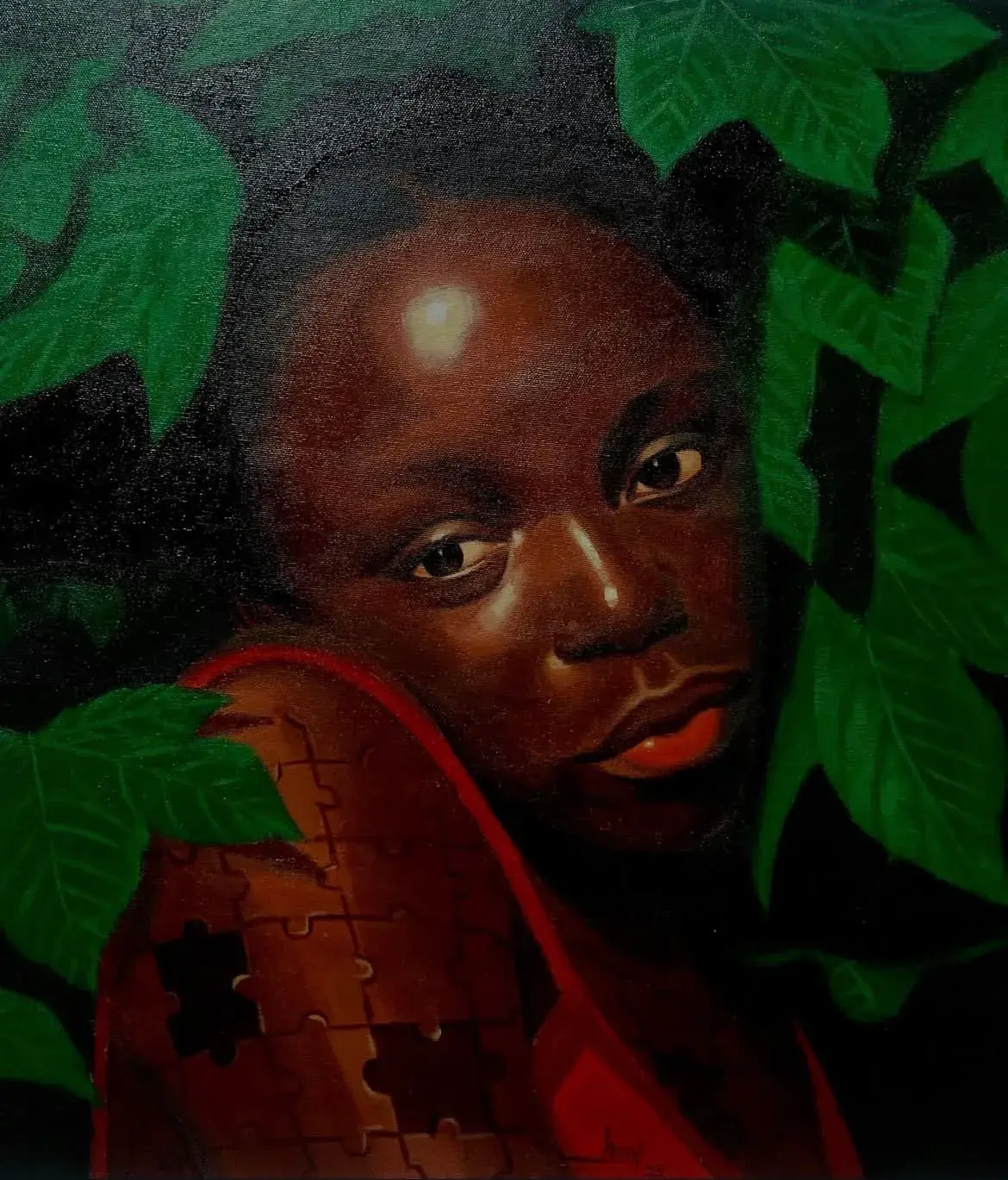
Portraiture is the backbone of contemporary African painting, and it ranges from quiet realism to explosive colour.
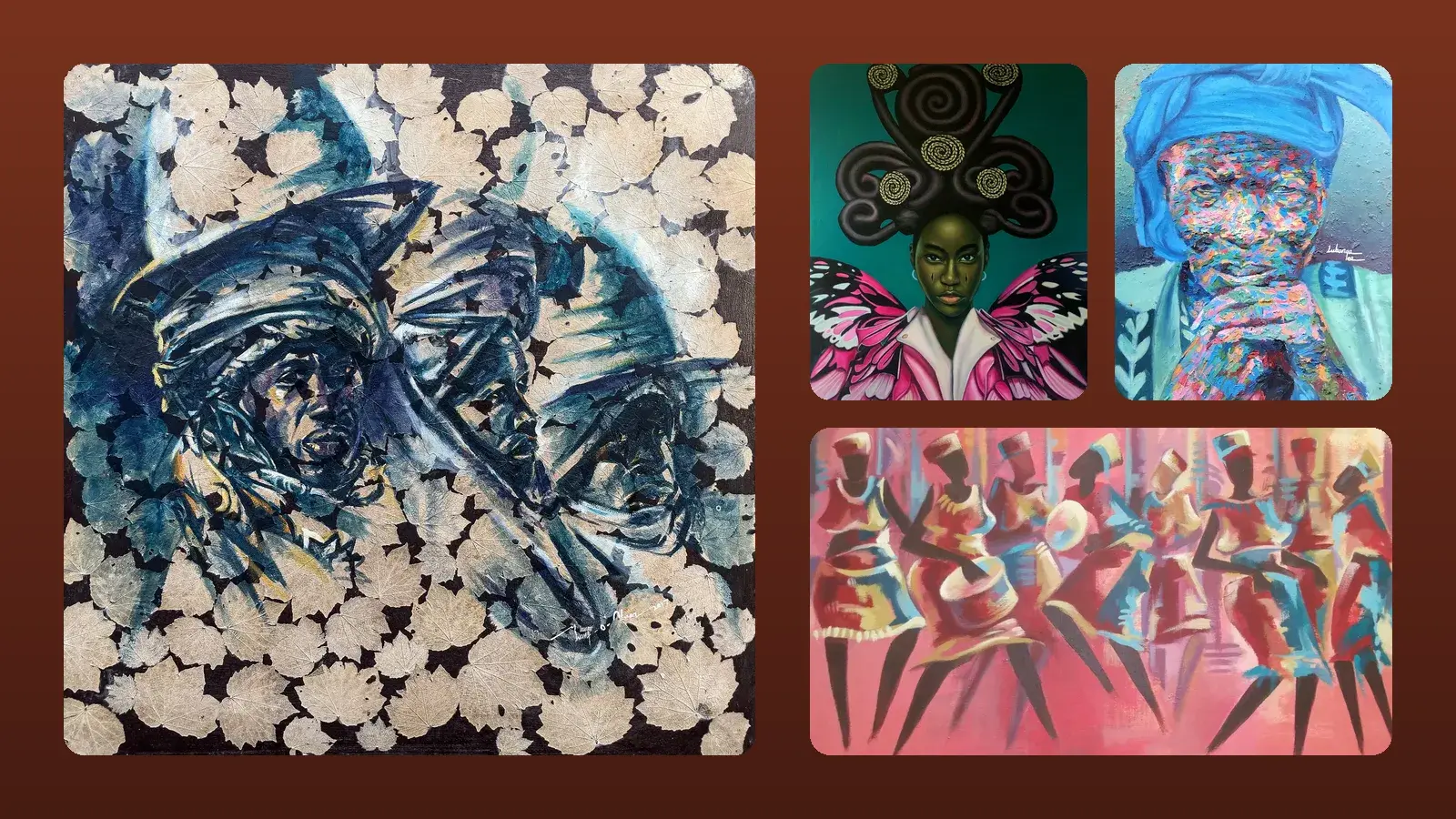
Spread Your Wings, 1,500 GBP. A large oil on canvas, 90 by 120 cm, by the Nigerian painter Oludare Samson. A young woman with sculpted coiled hair, wearing butterfly wings, painted with a polish that stops you in a doorway.
Sweet Like Wine, 166.09 GBP. An elderly woman in a blue headwrap, resting her chin on her hands, in oil on canvas, 79 by 60 cm, from Uganda.
Before We Learned to Worry, 150 GBP. A small portrait in acrylic on a hand cut oval canvas, 20 by 30 cm, from Nigeria. A good first original.
Heritage and everyday scenes
Festivals, markets and music: painting as a record of how life is lived.
Formation, 1,000 GBP. An oil and mixed media painting of the Durbar festival of northern Nigeria, turbaned riders painted in indigo against a field of pale leaf forms, 100 by 100 cm, by Yusuf Olayinka.
Happy Mothers, 520 GBP. Women dancing and drumming across a deep pink ground, in acrylic on canvas, 56 by 76 cm, from Ghana.
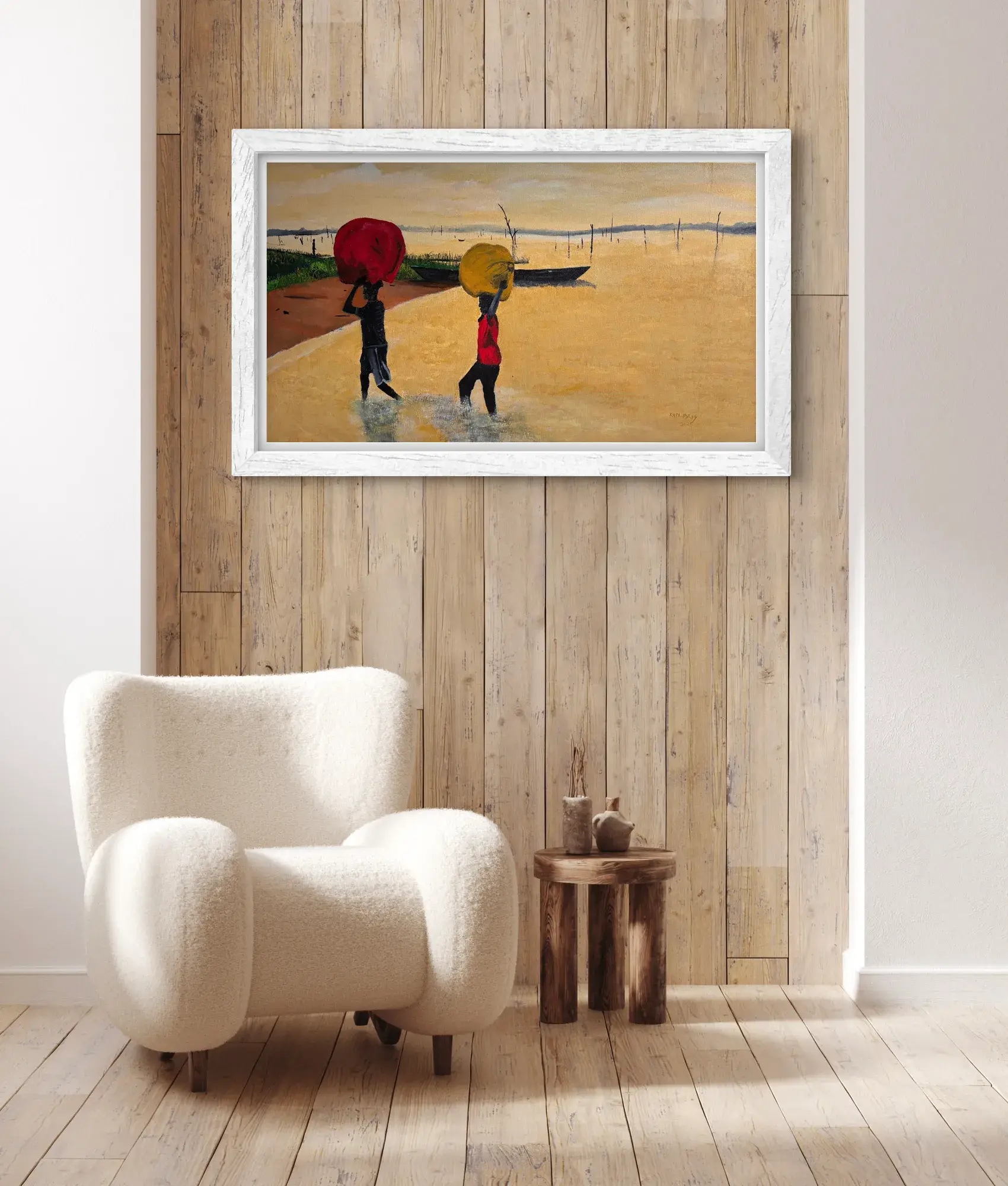
Shadows of the Village Market, 220 GBP. Three market women seen from behind, one balancing a tray of produce, in acrylic, 33 by 51 cm, from Ghana.
Landscapes, seascapes and wildlife
The easiest style to live with, and often the best entry point for a room that needs calm rather than drama.
Guardian of the Savannah, 445 GBP. A bull elephant walking out of a savannah sunset, acrylic on stretched canvas, 90 by 60 cm, from Tanzania.
Allure of the Shore, 350 GBP. A calm acrylic seascape of an African shoreline, 22 by 39 inches, from Nigeria.
Beautiful Cottage, 260 GBP. A sandy path through flowering trees, built from hundreds of small dabs of colour, acrylic, 33 by 51 cm, from Ghana. Sent rolled in a tube, which keeps delivery down.
Geometric and abstract
Bold shapes and colour fields. These are the statement pieces for a modern interior.
Leap by Victor Ubabike, 1,885 GBP. A figurative portrait broken into geometric planes, in the artist's signature Geometric Figurative Expressionism, acrylic on canvas, about 84 by 76 cm, from Nigeria.
Poise by Victor Ubabike, 2,265 GBP. A larger work in the same style, about 91 by 107 cm, supplied unframed.
Textured, impasto and mixed media
Paintings you want to touch: paint laid on thick, or built up with fabric, rope and beads.
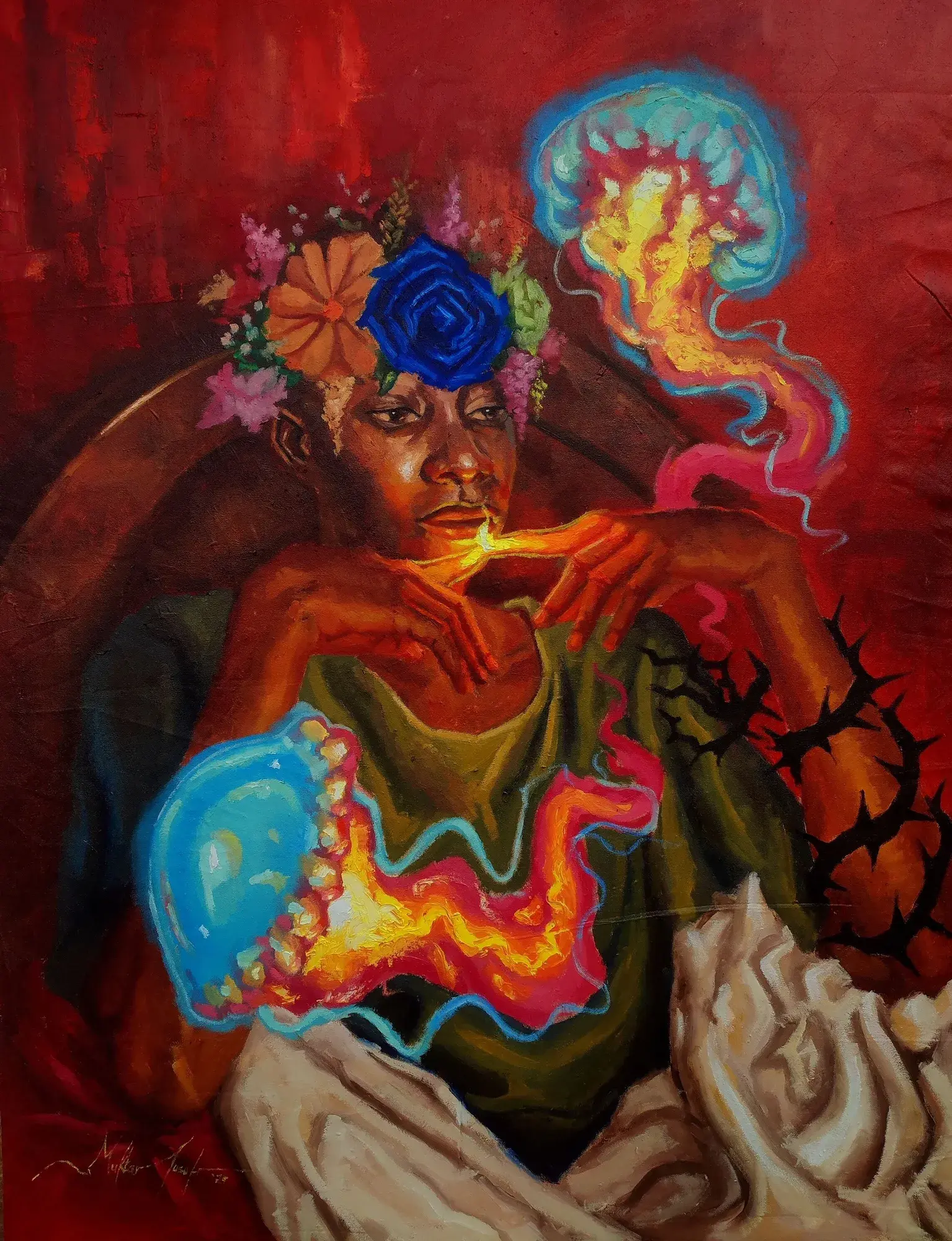
Chains Within, 176.47 GBP. A portrait in heavy, multicoloured impasto oil, about 70 by 89 cm, from Uganda.
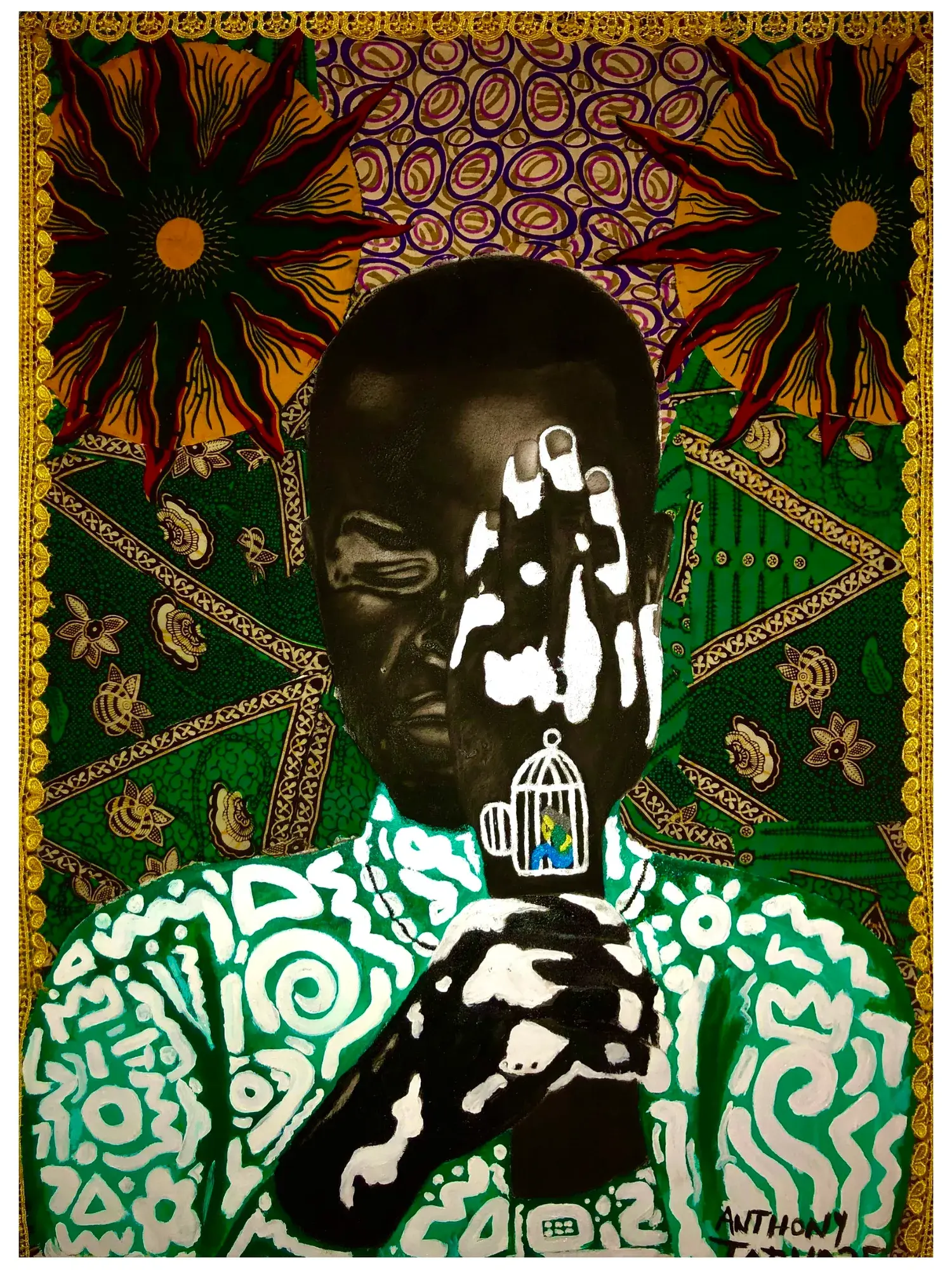
New Face, Ancient Ink, 650 GBP. Oil and fabric on canvas, 36 by 36 inches, by Ademola Ajayi, from Nigeria.
Adinkra Hene, 1,477.71 GBP. Coiled raffia rope over layered acrylic, 90 by 90 cm, supplied framed, from Ghana.
Drawings in pastel and charcoal
Not paintings in the strict sense, but often shown alongside them, and some of the most technically striking work on offer.
In Her Arms, 115 GBP. A mother holding her sleeping baby, pastel pencil on a chipboard panel, about 89 by 58 cm, from Nigeria.
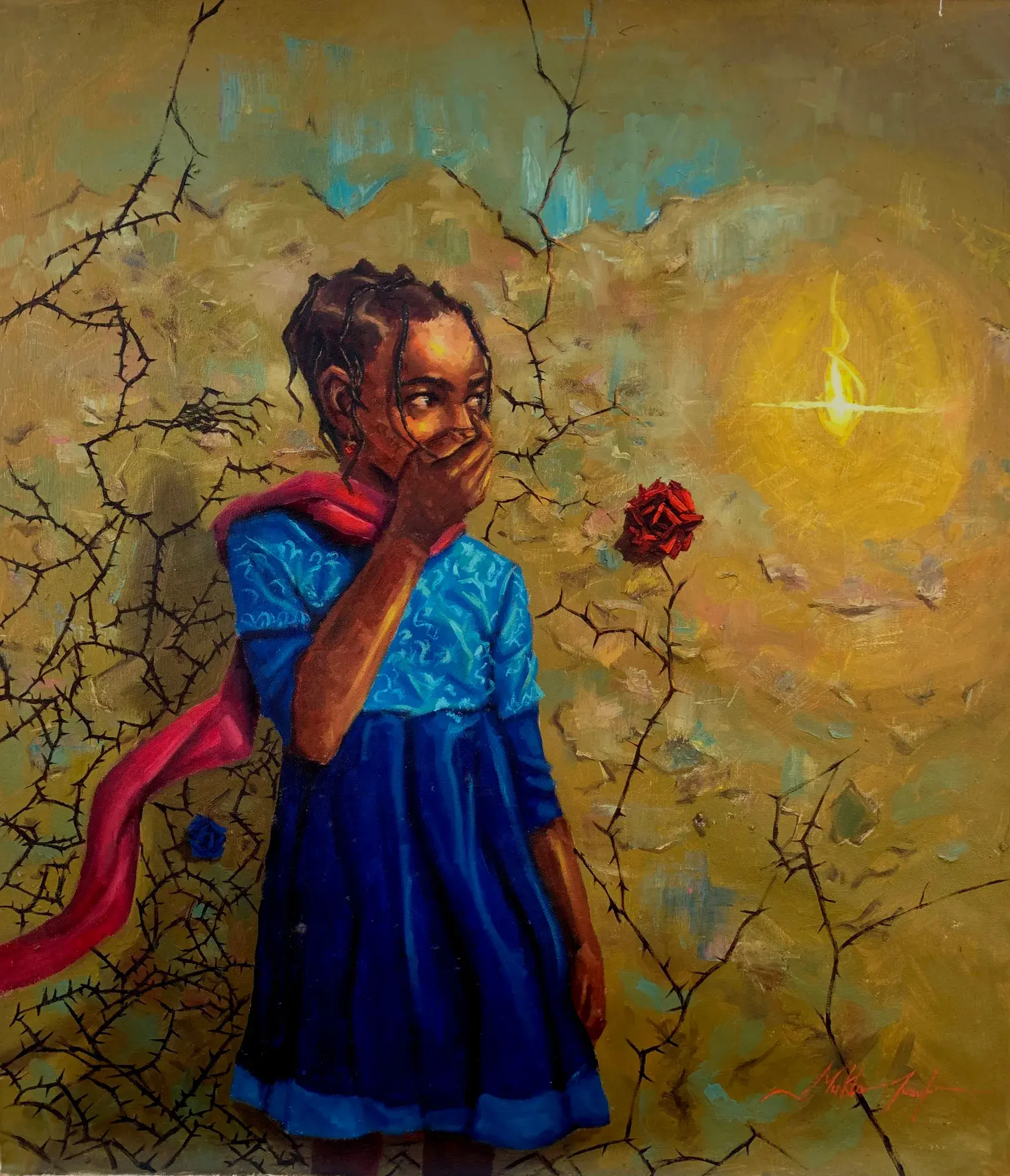
Bound by Silence, 560 GBP. A large soft pastel drawing, about 91 by 124 cm, about how readily we stay quiet, from Nigeria.
Browse every painting in African paintings or the wider art collection. Much of it comes from Nigerian artists, so Made in Nigeria is another good door in.
Oil, acrylic or impasto: what the medium tells you
Oil dries slowly, which lets the painter blend and glaze. It gives deep colour and a soft sheen, and it can take weeks to cure fully, which is why oils are often a little more expensive.
Acrylic dries fast and bright. Much of the contemporary African painting you will see is acrylic, and it travels well because the paint film is flexible.
Impasto is a way of painting rather than a paint: the colour is laid on so thick that brush and knife marks stand off the canvas. It photographs flat and looks extraordinary in person, especially under side light.
Mixed media adds other materials to paint: fabric, rope, beads, leaves, ceramic. Handle it gently and keep it out of damp rooms.
Choosing a painting for your wall
- Measure first. As a rough guide, a painting over a sofa or sideboard looks right at around two thirds of the width of the furniture below it.
- Decide between a statement and an accent. One large canvas usually does more for a room than three small ones.
- Pick the mood. Heritage scenes and portraits bring energy and story. Landscapes and seascapes bring calm. Geometric work suits minimal, modern rooms.
- Mind the light. Keep paintings, and especially pastels, out of direct sunlight, and avoid hanging over radiators or in steamy bathrooms.
- Check framing. Some paintings come framed, many large canvases come unframed, and some are sent rolled in a tube for a local framer to stretch. The listing says which.
Delivery and what happens after you order
Each artist sets their own dispatch time, shown on the listing, so check it if you are buying for a date. The delivery cost for your address is shown at checkout before you pay. Large framed canvases cost more to send than rolled or small works, so if a painting you love is large, it is worth asking the artist whether it can travel rolled. Depending on the value, import VAT or duty may be due when a painting arrives in the UK.
If a painting arrives damaged, wrong or not as described, report it within 48 hours of delivery and it gets put right.
Frequently asked questions
Where can I buy original African paintings online
From marketplaces that list artists under their own names and verify them, or directly from artists' own studios. Sokofa lists original oil, acrylic, impasto and mixed media paintings from verified artists in Nigeria, Ghana, Uganda, Tanzania and beyond, with delivery to the UK.
What is the difference between oil and acrylic paintings
Oil dries slowly, blends softly and has a gentle sheen. Acrylic dries quickly with bright, flat colour. Both are durable originals. Oils often cost a little more because they take longer to paint and to cure.
How much do original African paintings cost
Small originals and drawings start at around 115 to 150 GBP, mid size canvases typically run 200 to 600 GBP, and large works by established contemporary artists can run from 1,000 GBP to several thousand.
Do African paintings arrive framed
It varies by painting. Some arrive framed, many large canvases arrive unframed, and some are sent rolled in a tube for a local framer to stretch. Each listing says which.
How long does delivery take
Each artist sets their own dispatch time, which is shown on the listing, and the delivery cost for your address is shown at checkout. If you are buying for a date, check the dispatch time before you order.
What size painting should I buy
Measure the wall and the furniture below it. A painting about two thirds of the width of a sofa or sideboard usually looks right. For a large empty wall, one big canvas tends to work better than several small ones.